

Few cricketers in the history of the game have blended style, skill, and sportsmanship quite like David Gower. Known for his effortless stroke play and calm demeanor, Gower remains one of England’s most elegant left-handed batsmen. His presence at the crease was not just about scoring runs—it was about making the game look beautiful.
Quick Bio
| Quick Bio | Details |
|---|---|
| Full Name | David Ivon Gower |
| Date of Birth | April 1, 1957 |
| Place of Birth | Tunbridge Wells, Kent, England |
| Nationality | British |
| Playing Role | Left-handed Batsman |
| Batting Style | Left-hand Bat |
| Bowling Style | Right-arm Off Break |
| International Debut | 1978 vs Pakistan |
| Last International Match | 1992 vs Pakistan |
| Major Teams | England, Leicestershire, Hampshire |
| Total Test Runs | 8,231 |
| Total ODI Runs | 3,170 |
| Occupation after Cricket | Cricket Commentator, Author |
Early Life and Background

David Gower was born into a middle-class English family in Tunbridge Wells, Kent, in 1957. From an early age, he showed a deep love for sports, especially cricket. Educated at King’s School, Canterbury, Gower’s natural timing and graceful batting style became evident during his teenage years. He was not the most aggressive player in the nets, but his ability to find gaps with subtle flicks and cuts made him stand out.
By the time he entered university-level cricket, Gower was already being talked about as a prodigy. His composure at the crease and his eye for timing rather than brute force made him unique—a style that would later become his signature in international cricket.Rise to International Stardom
Gower’s journey to international fame began when he made his Test debut against Pakistan in 1978. In his very first innings, he scored a fluent 58, displaying the elegant shots that would define his career. Within a few years, he became a regular feature in England’s batting lineup.
The early 1980s saw Gower blossom into one of the most dependable and stylish batsmen in world cricket. His drives through the covers, his flicks off the pads, and his effortless pull shots became a treat for cricket fans. He wasn’t just about technique—he embodied grace under pressure.
The Graceful Left-Hander

When discussing David Gower, one cannot overlook his batting technique. He was not a power hitter; rather, he relied on the elegance of timing. His cover drive was considered one of the most beautiful shots in cricket history. Every movement he made seemed fluid—his wrists guiding the ball perfectly through the gaps.
Commentators often said that Gower made even a defensive shot look artistic. His footwork was minimal, but his eye coordination was impeccable. He played with a relaxed grace, earning him comparisons to Sir Garfield Sobers for his natural flair and balance.
Career Highlights and Achievements
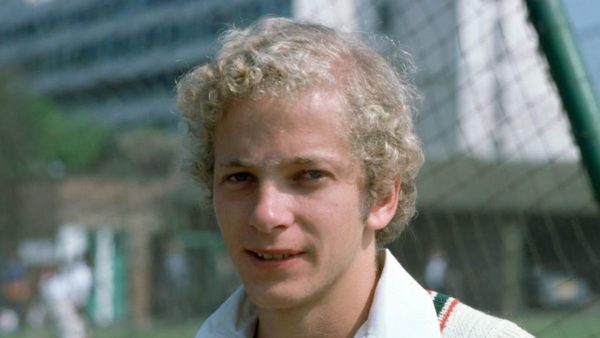
Over his 114 Test matches, Gower scored 8,231 runs at an average of 44.25, including 18 centuries and 39 fifties. In ODIs, he accumulated 3,170 runs in 114 games, maintaining an average above 30—an impressive feat for that era.
One of his most memorable performances came in 1985, during the Ashes series, where he captained England to a 3–1 victory against Australia. He scored 732 runs in the series, which remains one of the finest individual campaigns by an English captain.
Gower also played a vital role in England’s success in limited-overs cricket, leading the team with calmness and tactical awareness. His ability to inspire teammates without aggression made him a respected leader.
Captaincy and Leadership
When Gower took over as England’s captain in the mid-1980s, he brought a relaxed and thoughtful leadership style. His approach was rooted in confidence and trust rather than strict authority. Some critics questioned his easygoing demeanor, but his calmness often brought stability during tough situations.
Under his leadership, England won the 1985 Ashes series, where his batting form reached legendary levels. He led by example, proving that leadership could be graceful and effective without aggression. Despite facing challenges with selection politics and team dynamics, Gower’s captaincy remains one of the most memorable in English cricket history.
Famous Innings and Iconic Moments
One innings that fans still talk about is his majestic 215 against Australia at Edgbaston in 1985. It was a masterpiece of timing, placement, and patience. Every shot seemed effortless, leaving bowlers helpless. Another unforgettable moment was his 90 not out against the West Indies in Jamaica—a brave innings against one of the fiercest bowling attacks in history.
Even his lighter moments became part of cricketing folklore, such as the time he and John Morris famously flew a Tiger Moth plane during a tour in Australia. Though it caused a stir among management, it captured Gower’s free-spirited nature.
Challenges and Controversies
Like all great athletes, Gower’s career wasn’t free of challenges. Critics often labeled him “too casual” or “lazy” because of his relaxed style. However, he proved time and again that grace and success could coexist.
He also faced friction with selectors toward the end of his career, especially after the Tiger Moth incident. Despite the controversies, his dignity and humor remained intact, making him a beloved figure among fans and peers.
Retirement from Cricket
David Gower retired from international cricket in 1992, ending a career that spanned more than a decade. His farewell was filled with respect and admiration from across the cricketing world. By then, he had established himself not just as a top performer but also as a symbol of elegance in English cricket.
After his retirement, Gower continued playing county cricket briefly before transitioning to commentary, where his charming wit and deep understanding of the game found a perfect outlet.
Life After Cricket
Post-retirement, Gower became one of the most recognizable voices in cricket broadcasting. His work as a cricket commentator and presenter on channels like Sky Sports added another dimension to his legacy. His articulate analysis and humor made him a favorite among fans worldwide.
He also authored several books, sharing insights from his playing days and reflections on cricket’s evolution. His autobiography offers a candid look at his life, both on and off the pitch.
Legacy and Influence on English Cricket
Gower’s influence on English cricket extends beyond statistics. He changed how people perceived batting—showing that elegance and effectiveness could coexist. Young players often cite him as an inspiration for playing cricket with joy and artistry rather than mere aggression.
Even today, when discussions arise about England’s most stylish batsmen, David Gower’s name always tops the list. His legacy continues to shape how cricket is played, analyzed, and appreciated.
Personal Life
Away from cricket, Gower lives a contented life with his wife. Known for his charm and wit, he remains active in charity work and often participates in cricket-related events and discussions. Despite his fame, Gower is known for his humility and down-to-earth nature.
Interesting Facts About David Gower
- Gower was once compared to a cat on silk sheets for his smooth movements.
- He was one of the first English players to adapt easily to fast pitches in Australia.
- His favorite shot was the cover drive, which he played with unmatched perfection.
- Gower was awarded the OBE (Order of the British Empire) for his services to cricket.
- He remains one of the few players to score a century on his Test debut for England.
Conclusion
David Gower will forever be remembered as England’s most graceful cricketer—a man who made batting look like an art form. His legacy continues to inspire new generations to play cricket with style, intelligence, and composure. Whether on the field or behind the commentary microphone, Gower’s contribution to the game remains invaluable.
FAQs
Who is David Gower?
David Gower is a former English cricketer known for his elegant batting and leadership, regarded as one of the most stylish left-handers in cricket history.
What is David Gower’s highest Test score?
His highest Test score is 215, scored against Australia during the 1985 Ashes series.
When did David Gower retire from international cricket?
He retired in 1992, after representing England for over a decade.
How many centuries did David Gower score in Tests?
He scored 18 Test centuries for England.
What is David Gower doing now?
He currently works as a cricket commentator, presenter, and author.
For More Latest Update dailycaller.co.uk
